

At times, geothermal hotspots are easily identifiable, indicated by geysers and hot springs on the surface of the Earth. However, in other regions, they remain hidden thousands of feet below ground. AI now has the potential to reveal these concealed areas of energy potential.
A startup named Zanskar disclosed today that it has employed AI and other sophisticated computational techniques to discover a concealed geothermal system—one that lacks surface indicators—in the western Nevada desert. The firm claims this is the first blind system identified and confirmed as a viable commercial opportunity in more than three decades.
Traditionally, discovering new geothermal power sites involved considerable effort. Companies invested significant time and financial resources in drilling deep wells to find suitable locations for plant construction.
Zanskar’s methodology is notably more accurate. With breakthroughs in AI, the company seeks to “tackle a problem that has remained unresolvable for years and ultimately locate those resources, proving they are much larger than previously believed,” asserts Carl Hoiland, the cofounder and CEO of the company.
For a successful geothermal power facility, a location must provide high temperatures at a reachable depth along with adequate space for fluid movement through the rock to transmit heat. In this instance, referred to by the company as Big Blind, the target is a reservoir that achieves 250 °F approximately 2,700 feet beneath the Earth’s surface.
As global electricity requirements surge, geothermal systems such as this could offer a reliable power source while avoiding the greenhouse gas emissions responsible for climate change.
The company has deployed its technology to pinpoint numerous potential hot spots. “We have many sites that resemble this one,” remarks Joel Edwards, Zanskar’s cofounder and CTO. However, for Big Blind, the team has conducted extensive fieldwork to validate its model’s forecasts.
The initial phase of identifying a new site involves utilizing regional AI models to scan extensive areas. The team trains these models based on known hot spots and various simulations created in-house. Following that, they input geological, satellite, and other datasets, which include fault line information. The models then predict the potential locations of hot spots.
A key advantage of applying AI to this task is its ability to process the tremendous intricacy of the available data. “If there’s something that can be learned from the earth, even if it’s a highly complex phenomenon that challenges human understanding, neural networks have the capacity to comprehend it, if sufficient data is provided,” states Hoiland.
Once models identify a probable hot spot, a field team visits the area, which may span around 100 square miles, collecting further information through techniques that include drilling shallow holes to detect heightened underground temperatures.
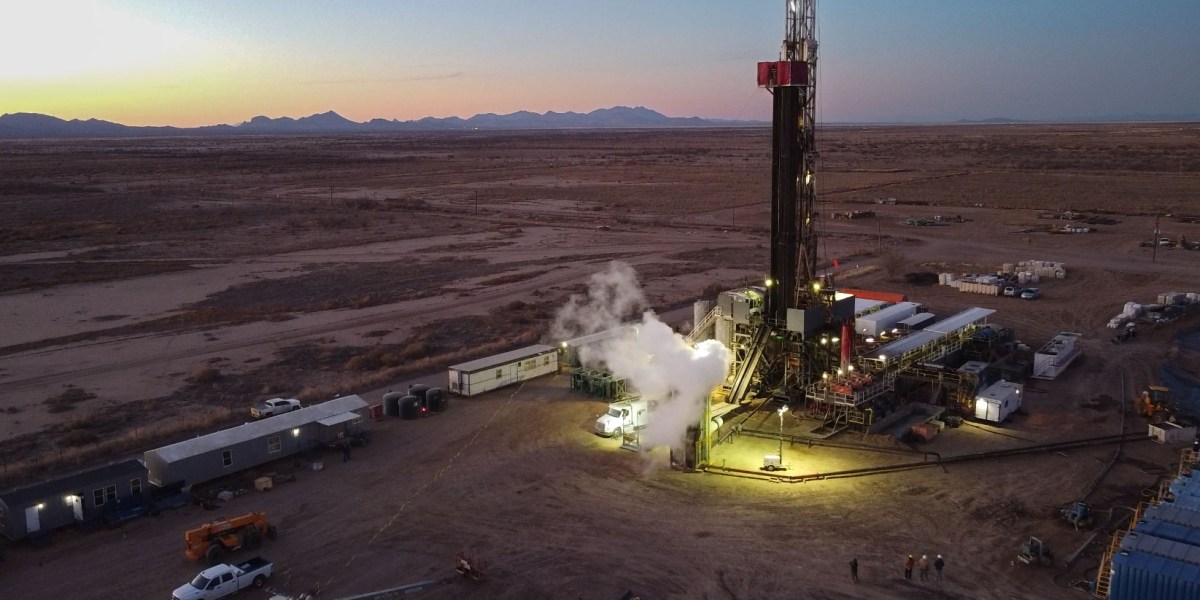
For Big Blind, this prospecting data instilled sufficient assurance in the company to acquire a federal lease, enabling it to advance with the geothermal plant’s development. With this lease obtained, the team returned equipped with substantial drill rigs and drilled thousands of feet down in July and August. The workers discovered the anticipated hot, permeable rock.
Next, they need to secure the necessary permits to establish connections to the grid and arrange the funding required to construct the plant. The team will continue testing at the site, including long-term evaluations to monitor heat and water flow.
“There’s a critical demand for methodologies that can explore large-scale features,” indicates John McLennan, the technical lead for resource management at Utah FORGE, which is a national lab field site for geothermal energy supported by the US Department of Energy. The new find is “promising,” McLennan adds.
Big Blind marks Zanskar’s inaugural confirmed discovery that has not been previously explored or developed, although the company has leveraged its tools for other geothermal exploration endeavors. Earlier this year, it announced a find at a site that had been previously examined by the industry but never developed. The company also revived a geothermal power facility in New Mexico.
And this could merely be the beginning for Zanskar. As Edwards describes, “This marks the beginning of a surge of new, naturally occurring geothermal systems that will have sufficient heat available to support power facilities.”
