
Including nuclear power, the US grid has achieved a 40 percent emissions-free status during the first nine months of 2025. This marks only a 1 percent increase compared to the same timeframe last year. Additionally, since coal produces more carbon than natural gas, it is probable that the US will experience a net rise in emissions related to electricity this year.
For those seeking a reason to feel a bit more hopeful, the EIA leveraged the latest data to publish an analysis regarding California’s grid situation, where utility-scale solar generation has nearly doubled in the last five years, partly due to a further 17 percent increase so far in 2024.
Throughout 2023, it was difficult to identify any influence of solar generation on the overall grid, partly owing to growing demand. However, since then, there has been a significant reduction in natural gas usage (down by 17 percent thus far in 2025), putting it at risk of being surpassed by solar as California’s primary electricity source as soon as next year. This transition is occurring even as California’s overall consumption has risen by 8 percent so far in 2025 compared to the same period last year.
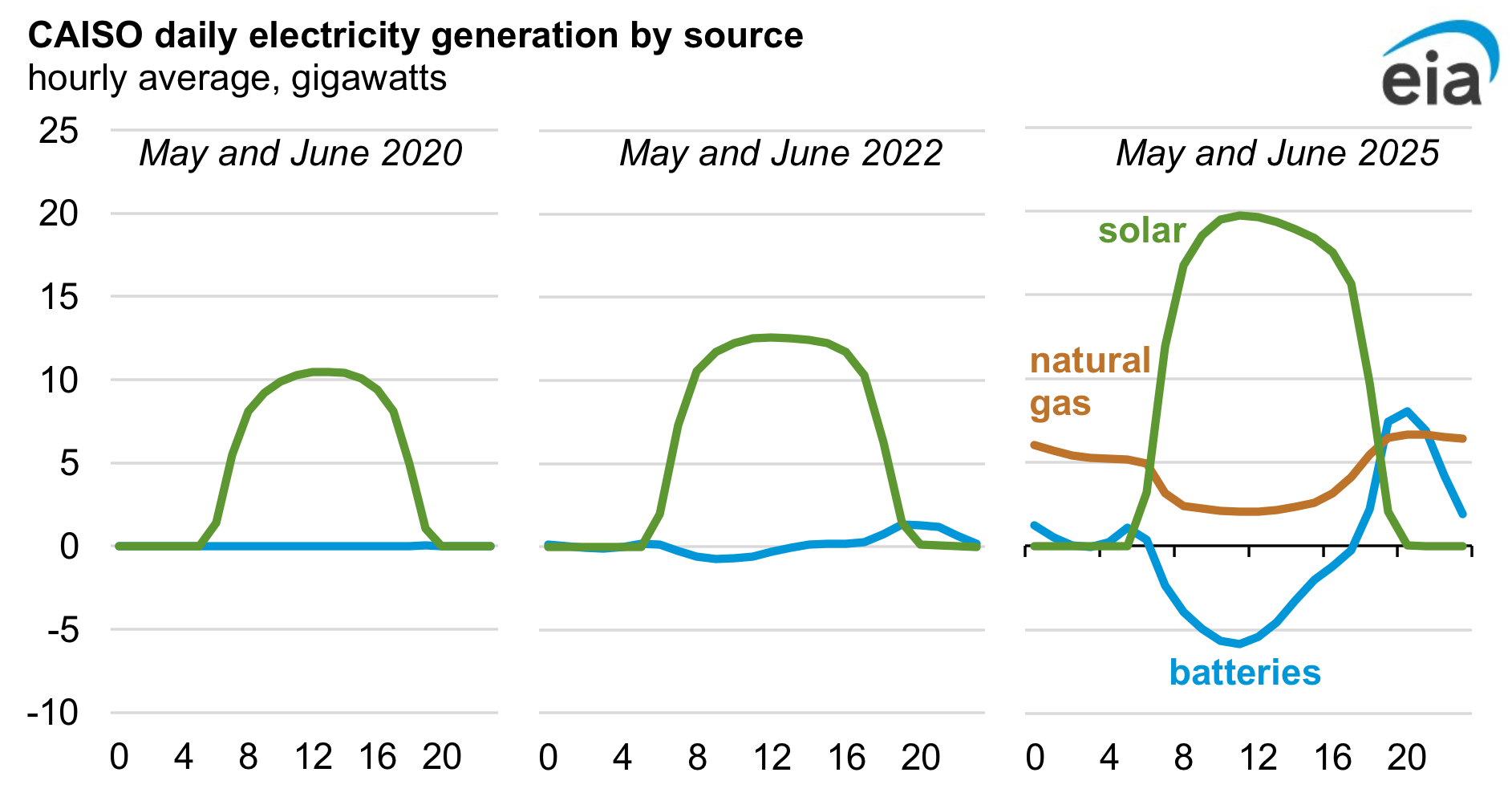
The substantial rise in solar production has resulted in excess electricity generation during spring and fall, when heating and cooling needs are minimal. Consequently, this has prompted a boom in battery installation to capture the inexpensive electricity and sell it back after sunset. The effect of batteries was nearly indistinguishable as recently as 2023, but data from May and June of 2025 indicate large amounts of power being stored in batteries at midday, which are then used in the early evening to completely counter what would otherwise be a significant spike in natural gas usage.
Not all states possess the same solar resources as California. However, the financial viability of solar energy implies that other states will likely see similar growth in the upcoming years. Moreover, although the Trump administration has been overtly opposed to solar energy since its inception, there are currently no signs of that opposition affecting the grid.
